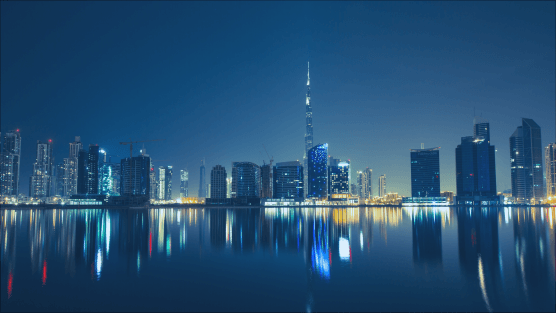
UAE is a country in the Middle East.Emirates is home to a rich cultural heritage that has been strongly influenced by its unique environment.The United Arab Emirates is the constitutional federation of seven emirates: Abu Dhabi, Dubai, Sharjah, Ajman, Umm Al-Quwain, Ras Al Khaimah, and Al Fujairah. It stretched over 1448 km from the west coast of Persian Gulf and Gulf of Oman, where water and land overlap, to the Arabian Peninsula. The United Arab Emirates mainland varies from narrow plains surrounded with sand desert throughout the west and the south to highlands stretching in the Far East and southern east to the borders of Oman.
Abu Dhabi has a sub-tropical, arid climate. Sunny blue skies and high temperatures can be expected most of the year.
Rainfall is sporadic, falling mainly in winter (November to March) and averaging 12cms per year in most of the emirate. Rain is more common in the ‘Oasis City' of Al Ain, the emirate’s second largest city, due to its proximity to the Hajar mountains. Arabic is the official language, although English is widely spoken and most road and shop signs and restaurant menus are in both languages. The further out of town you go, the more Arabic you will find, both written and spoken.
Islam is the official religion of the UAE, and is widely practiced. The basis of Islam is the belief that there is only one God and that Prophet Mohammed (peace be upon him) is his messenger. The Islamic holy day is Friday. Muslim is required to pray (facing Mecca) five times a day. The times vary according to the position of the sun, when the modern-day call-to-prayer is transmitted through loudspeakers on mosque minarets.
Temperatures range from a low of around 13°C (50°F) on a winter’s night, to a high of around 42°C (118°F) on a summer’s day. The cooler months, November to April, are the most pleasant time to visit, when temperatures are around 24°C (75°F) during the day and 13°C (56°F) at night.
Require Documents:
- 1. Demand Letter
- 2. Power of Attorney
- 3. Agency Agreement
- 4. Guarantee Letter
- 5. Employment Contract
- 6. Chamber of Commerce / Nepal Embassy (in some case)

© 2019 All Rights Reserved. Developed By HG Technology.